India’s construction market is one of the most diverse in the world. Due to a multitude of geographies and weather conditions, choosing the right roofing sheet is essential. Choose the wrong material, and you could be dealing with leakage, corrosion, or excessive heat buildup within a few years.
This guide serves to cover all major roofing sheet solutions in India, including what they’re made up of, their pros and cons, and the applications they suit best. Whether you’re building a home or factory, whether it’s in Rajasthan or in Kerala, this guide is all you’ll ever need to make the right decision.
India’s roofing sheet market can be broadly split into two segments – metal roofing (steel and aluminium) and non-metal roofing (polycarbonate, fibre cement, bitumen). Metal roofing is the dominant choice for industrial, commercial, and pre-engineered roofing. Non-metal options are more common for residential and agricultural applications, as well as in applications where natural light is needed.
However, the right roofing sheet should be chosen based on five main factors: environment (coastal vs inland, urban vs rural), building type and use, budget and lifecycle cost, aesthetic requirements, and thermal or acoustic performance.
Here is the comprehensive list of Roofing Sheets in India – along with their pros, cons, and applications they’re most suitable for.
GI corrugated sheets are Galvanised steel sheets shaped into a wave pattern. They are among the oldest and most widely used roofing materials in rural and semi-urban India, available through stockists across the country – from major steel producers to regional re-rollers. The zinc coating (typically 120-275 GSM) protects the steel from rust, however, their lifespan depends on the environment.
Best for: Agricultural sheds, rural warehouses, temporary structures, and low-budget construction in non-coastal inland areas.
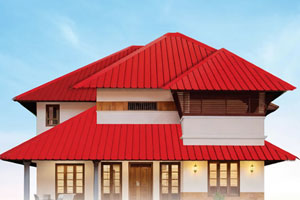
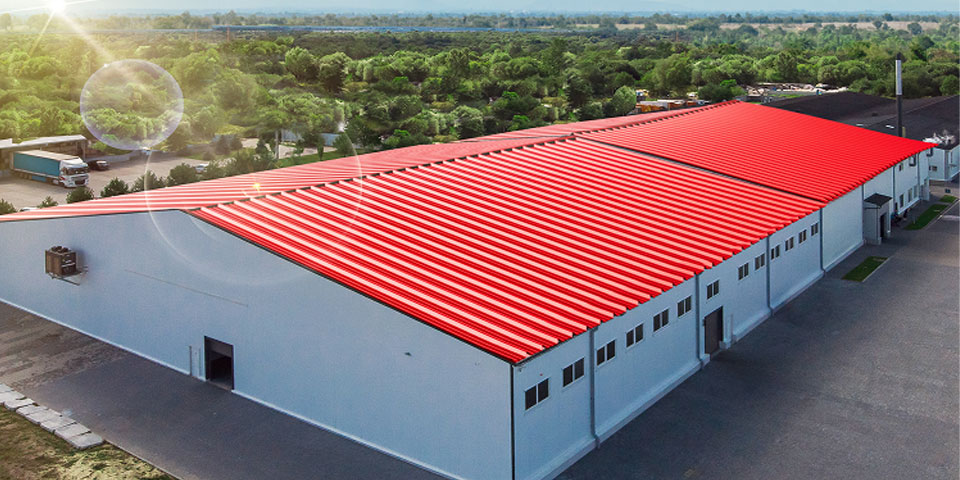
Colour-coated steel sheets, marketed as PPGI (Pre-Painted Galvanised Iron) or PPGL (Pre-Painted Galvalume), are the preferred choice for industrial, commercial, and pre-engineered buildings across India. They have a zinc or zinc-aluminium base coating along with layers of factory-applied paint (polyester, HDP, or PVDF), and come in different shapes and colours.
Best for: Factories, warehouses, pre-engineered buildings, commercial roofing, and residential use – making it an all-round choice for most Indian applications.
Galvalume, also referred to as aluminium-zinc (AZ) coated steel, features an aluminium-zinc-silicon alloy coating instead of a conventional zinc coating. The aluminium content enhances corrosion resistance and improves heat reflectivity, while the zinc provides sacrificial protection against rust. AZ-coated steel can be used as bare roofing sheets or as the base substrate for PPGL (Pre-Painted Galvalume) colour-coated roofing sheets, offering enhanced durability and long-term performance.
Best for: Coastal and humid environments, chemical plants, long-life bare metal roofing, and high-temperature environments near industrial heat sources.
Polycarbonate sheets are used to bring natural light into buildings without opening the roof. They come in flat, corrugated (to match metal sheets), and multiwall formats. UV-stabilised grades resist yellowing. They are typically installed as roof lights or skylight strips within a metal roofing system, covering about 5-10% of the roof area to provide adequate daylight.
Best for: Daylighting strips in factories and warehouses; agricultural greenhouses; covered walkways; swimming pool enclosures.
Fibre cement sheets are made from Portland cement reinforced with fibres and formed into a corrugated shape. They became popular after asbestos was banned and are still widely used in schools, government buildings, and rural construction because they resist fire and handle heat well. Modern sheets are completely asbestos-free and meet IS 459 standards.
Best for: Schools, government and institutional buildings, rural housing, and agricultural structures in non-coastal areas.
Insulated Sandwich Panels combine two colour-coated steel sheets with an insulated core (PUF, EPS, or mineral wool). Each panel ensures strength, insulation, and weather protection – thereby reducing the need for other layers such as purlins and liner sheets.
Best for: Cold storage, food processing, pharmaceutical manufacturing, clean rooms, and energy-efficient commercial and industrial buildings.
Aluminium roofing sheets are made from pure aluminium or alloys and are rolled into corrugated or trapezoidal shapes. Aluminium naturally forms a protective layer when exposed to air, so it resists corrosion without any coating. This makes it ideal for marine, coastal, and chemical environments where steel tends to degrade.
Best for: Coastal factories, marine facilities, chemical plants, swimming pool roofs, and high-value architectural applications.
Bitumen corrugated sheets are made from organic fibres or fibreglass, coated with bitumen (asphalt) and finished with mineral granules. They are lightweight, easy to cut and install, and are available in slate grey, terracotta, and green colours.
Best for: Garden sheds, poultry houses, rural outbuildings, temporary site offices, and low-budget rural housing.
| Type | Weight (kg/m²) | Corrosion Resist. | Service Life | Best Application |
| GI Corrugated | 4-7 | Moderate | 8-15 yrs | Rural, agricultural, budget projects |
| PPGI Colour Coated | 4-8 | Good-Excellent | 15-25 yrs | Industrial, commercial, PEB, residential |
| Galvalume (PPGL/AZ) | 4-8 | Excellent | 25-30 yrs | Coastal, aggressive environments |
| Polycarbonate | 1-3 | N/A | 10-20 yrs | Daylighting strips, skylights |
| Fibre Cement | 12-18 | N/A | 20-30 yrs | Institutional, rural residential |
| Sandwich Panel | 10-18 | Good | 20-25 yrs | Cold storage, food processing, energy builds |
| Aluminium | 2-4 | Excellent | 30-40 yrs | Coastal, marine, chemical environments |
| Bitumen/Asphalt | 3-5 | N/A | 8-15 yrs | Rural sheds, poultry, temporary structures |
When it comes to choosing the right roofing sheet, your environment plays as important a role as your building type. So, consider the environment first, and then match the material to the project type, before proceeding to verify the specifications.
There is no single roofing sheet that's ideal for every project. The right choice depends on your location, application, budget, and expected lifespan. However, for projects where durability, corrosion resistance, energy efficiency, and appearance are key priorities, PPGL colour-coated steel roofing sheets consistently stand out as one of the best-performing options.
JSW Steel's PPGL colour-coated roofing sheets are designed to meet the demands of India's varied climate, making them a preferred choice for architects, contractors, and industrial builders alike. By investing in a high-quality PPGL roofing solution from JSW Steel, you can achieve long-lasting performance, reduced maintenance, and reliable protection for years to come.
Answer: PPGL roofing sheets are often the preferred choice for homes due to their durability, corrosion resistance, attractive finish, and long-lasting performance.
Answer:
Answer: PPGL roofing sheets are ideal for coastal regions as they offer excellent resistance to corrosion caused by moisture and salt-laden air.
Answer: Depending on the material, coating, and maintenance, quality roofing sheets can last anywhere from 20 to 40 years or more.
Answer: Insulated roofing sheets, such as PUF sandwich panels, provide the best thermal insulation. Among standard metal sheets, PPGL offers better heat reflectivity than GI.
Answer: Consider the climate, corrosion resistance, thermal performance, durability, roof design, maintenance requirements, aesthetics, and your budget before making a choice.
View all news