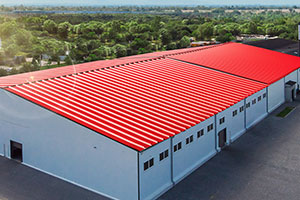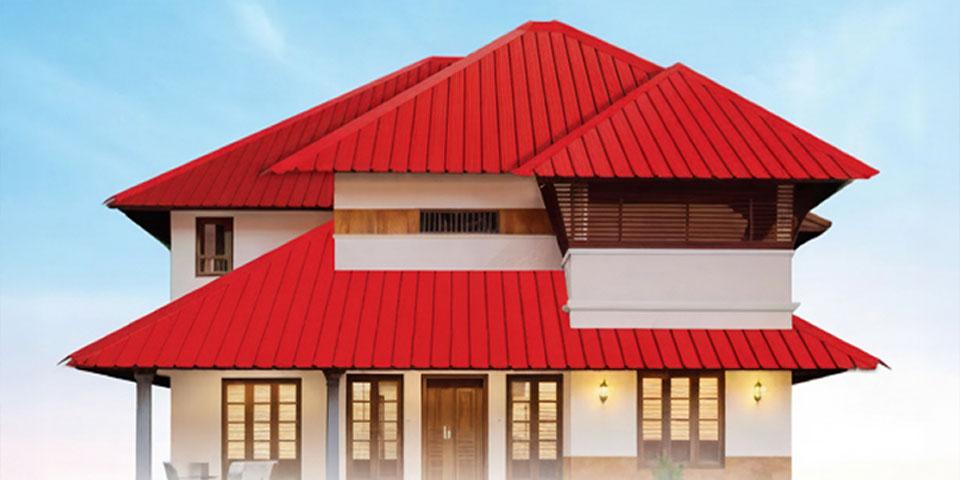
Look at any modern warehouse, factory, school, or commercial building across India, and you will almost certainly find Colour-coated steel sheets on the roof or walls. Their combination of durability, aesthetics, low weight, and cost-effectiveness has made them the dominant material for industrial and commercial roofing and cladding. They are also increasingly popular for residential projects.
This guide covers everything you need to know about Colour-coated steel sheets: what they are, how they are made, the different types available, their key specifications, and how to choose the right product for your project.
Colour-coated steel sheets, also called pre-painted steel sheets or PPGI (Pre-Painted Galvanised Iron) sheets, are steel coils or sheets coated with layers of organic paint or polymer. This coating is applied over a zinc or zinc-aluminium base layer. They protect against corrosion while offering colour and design flexibility in one product.
The base material is typically a hot-dip galvanised (GI) or galvalume (AZ) steel coil. This base is cleaned and chemically treated before running through a continuous coil coating line where primer and topcoat layers are applied and oven-cured.
The result is a factory-finished steel product that arrives on site ready to be used. This means that no painting, priming, or surface preparation is required. This is fundamentally different from site-painted galvanised sheets, where coating quality and adhesion are often inconsistent.
Colour-coated steel sheets are produced through a continuous process in which a steel coil is unwound, cleaned, pre-treated, primed, top-coated, cured, and rewound. This automated process ensures consistent coating thickness and adhesion across the entire coil.
Surface Preparation: The galvanised steel coil is cleaned using alkaline degreasing and rinsed to remove mill oil and contaminants.
Chemical Pre-treatment: A conversion coating is applied. This creates a chemically bonded foundation that improves paint adhesion and corrosion resistance.
Primer Coat: An epoxy or polyester-based primer is applied and oven-cured. The primer adds corrosion protection and acts as a bridge between the metal and topcoat.
Topcoat Application: The decorative topcoat (polyester, PVDF, SMP, or HDP) is applied by roller and cured at high temperatures.
Back Coat: A thin coating is applied to the reverse side to prevent corrosion.
There are several reasons why these sheets have replaced traditional materials across India:
Superior weather and corrosion resistance:
The zinc or zinc–aluminium base layer, combined with a high-performance primer and specialised topcoat, acts as a multi-layer defence system against moisture, heavy rain, and intense UV radiation. By choosing the right specification based on your local climate and application needs, your roof can easily last 15 to 30 years.
Significant weight reduction for structural economy:
One of the most practical advantages is the impressive strength-to-weight ratio. These sheets typically weigh between 4 and 8 kg/m², which is a fraction of the weight of traditional clay tiles or concrete roofing. By reducing the "dead load" on the building, you can design lighter and more cost-effective supporting frameworks. This leads to substantial savings on the steel used for purlins, rafters, and the overall foundation.
Rapid project completion and ease of installation:
In construction, time is money. Because these sheets arrive on-site pre-painted, oven-cured, and cut to specific profiles, you do not need to spend time on painting or surface prep. They are designed for fast-track installation using self-drilling screws or concealed clip systems. This allows contractors to cover large surface areas in just a few days, drastically shortening the project timeline.
Long-term sustainability and energy efficiency:
Steel is 100% recyclable at the end of its life cycle, making it an environmentally friendly choice. Additionally, these sheets can be finished with "cool-roof" technology. These coatings have a high Solar Reflectance Index (SRI) that reflects solar heat away from the building – keeping interior temperatures much cooler, and your energy bills lower.
If you are planning a project, follow these three steps to ensure you get the right material:
Check Your Environment:
If you are in a coastal or high-humidity area, you need a Galvalume base with a PVDF or HDP topcoat. Standard inland projects can usually get away with a PPGI base and a polyester topcoat.
Verify the Thickness:
For structural roofing in India, you should not go below a base metal thickness of 0.45 mm. For longer spans or areas with high wind loads, 0.50 mm to 0.60 mm is much safer.
Insist on Certification:
Do not just take a supplier's word for it. Always ask for IS 14246 compliance and request a test certificate for your specific batch to verify the coating weight and paint thickness.
By Base Material
PPGI (Zinc Base): Best for general roofing, cladding, and budget-sensitive applications.
PPGL / Galvalume (Aluminium + Zinc): Ideal for high-corrosion environments, coastal areas, and long-life roofing.
PPAL (Pure Aluminium): Best for high-heat environments like chimneys and specific industrial applications.
By Topcoat Type
Polyester (PE):
This is the most widely used and cost-effective coating option available in the Indian market. It offers a massive range of colours and finishes, making it a go-to for standard commercial projects. While it provides solid durability for inland environments, it is best suited for projects where budget is a primary concern and the environmental conditions aren't hostile.
High Durability Polyester (HDP):
If you need a step up from standard polyester, HDP is the specialised choice. It is formulated with more stable resins and pigments to provide significantly better resistance to UV radiation and harsh weather. This makes it a great middle-ground option for buildings that face heavy sun exposure and need better colour retention over a longer period.
Silicon Modified Polyester (SMP):
By incorporating silicone into the polyester resin, this coating achieves a much harder surface that is highly resistant to chalking and fading. It offers excellent heat resistance and mid-tier durability, making it particularly effective for industrial roofing in hot climates where the surface temperature of the metal can reach extreme levels.
Polyvinylidene Fluoride (PVDF):
This is considered the "gold standard" or premium coating for steel sheets. PVDF consists of a high percentage of fluoropolymer resin, which provides the ultimate protection against chemical pollutants, extreme UV rays, and salt spray. It is the recommended choice in coastal regions or high-pollution industrial zones because it maintains its original colour and structural integrity longer than any other coating type.
Choosing the right Colour-coated steel sheets is not just about picking a shade of blue or red for your roof. It is a technical decision that directly impacts how long your building will last and how much you will spend on maintenance over the next two decades. The difference between a standard 120 GSM polyester sheet and a high-performance 150 GSM Galvalume PVDF sheet can mean an extra 15 years of service life, especially considering the demanding climates across India. Before you sign off on your procurement, make sure you have verified the IS 14246 compliance and double-checked that the base metal thickness matches your structural requirements. Taking the time to specify the right material now will save you from the hassle of premature corrosion or fading in the future.